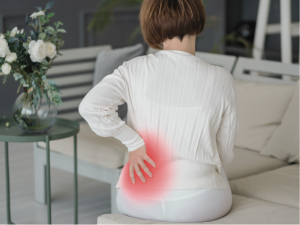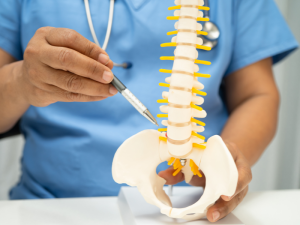
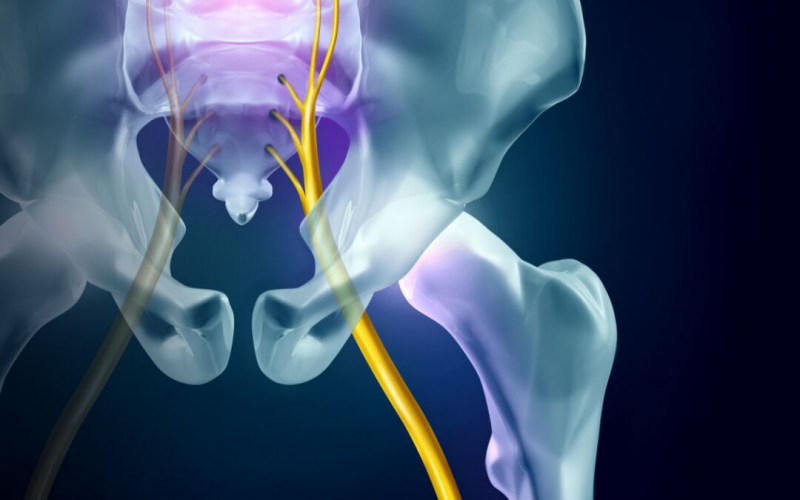
Sciatica is a relatively common condition that describes pain that travels from the lower back into the buttocks and down the leg. It happens when a nerve root in the lower spine becomes irritated or compressed. Although the pain can be severe, most people improve with time and appropriate care.
What causes sciatica?
Sciatica develops when a nerve root in the lower spine becomes irritated or compressed.
Common causes include:
• lumbar disc herniation
• spinal stenosis
• spondylolisthesis
• inflammation around a nerve root
Less commonly, other conditions may produce similar symptoms.
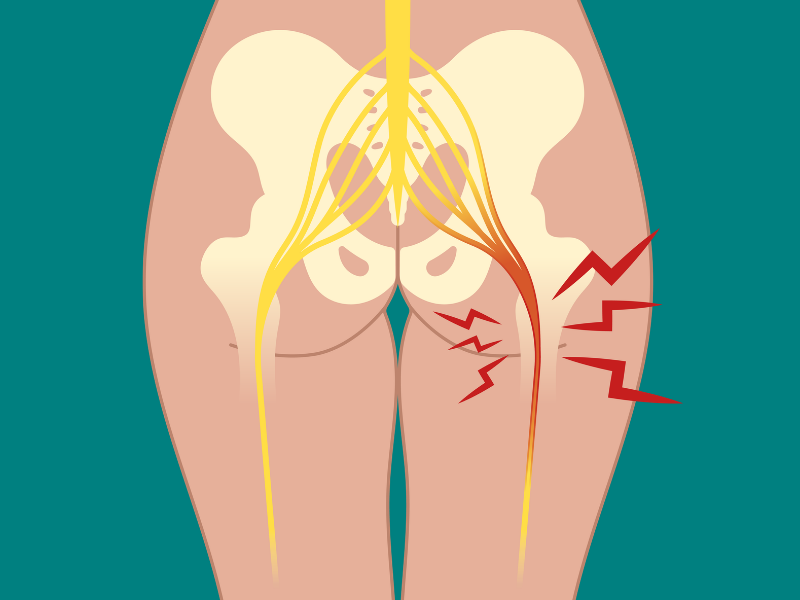
The sciatic nerve
The sciatic nerve is the largest nerve in the body. It forms from several nerve roots in the lower spine and travels through the buttocks and down the back of the thigh and leg to the foot.
It helps control leg movement and carries sensory information from the leg and foot back to the brain.
How is sciatica diagnosed?
Diagnosis is usually based on a careful history and physical examination.
An osteopath will assess how the back, hips, and legs move and check muscle strength, sensation, and reflexes. These tests help identify whether a nerve root may be irritated.
In some cases, imaging may be recommended if symptoms are severe, persistent, or unusual.
Investigations may include:
• MRI scans
• CT scans
• nerve conduction studies
X-rays are generally not helpful for diagnosing sciatica because they do not clearly show nerves or discs.
There are two types of sciatica:
- Acute sciatica, which lasts up to six weeks
- Chronic (persistent) sciatica, which lasts longer than six weeks
When to seek urgent help
Sciatica itself is not usually a medical emergency. However urgent medical assessment is needed if someone develops:
• loss of bowel or bladder control
• numbness around the saddle area
• progressive leg weakness
These symptoms may indicate Cauda Equina Syndrome, a rare but serious condition that requires urgent medical assessment.
Related articles
If you would like to learn more about how sciatica is managed, including the role of osteopathic care, see: Can Osteopathy Help Sciatica?
For practical advice on exercises and recovery, see: Recovery From Sciatica
Please note
This information is intended as general guidance and should not replace medical advice, diagnosis, or treatment provided in person by an appropriately trained healthcare professional