
A deep, nagging ache in the buttock that sometimes travels down the back of the leg is a common complaint. Many people are told the cause is piriformis syndrome.
But is the piriformis muscle really the problem, and does this condition actually exist as a clear medical diagnosis?
The Piriformis Muscle
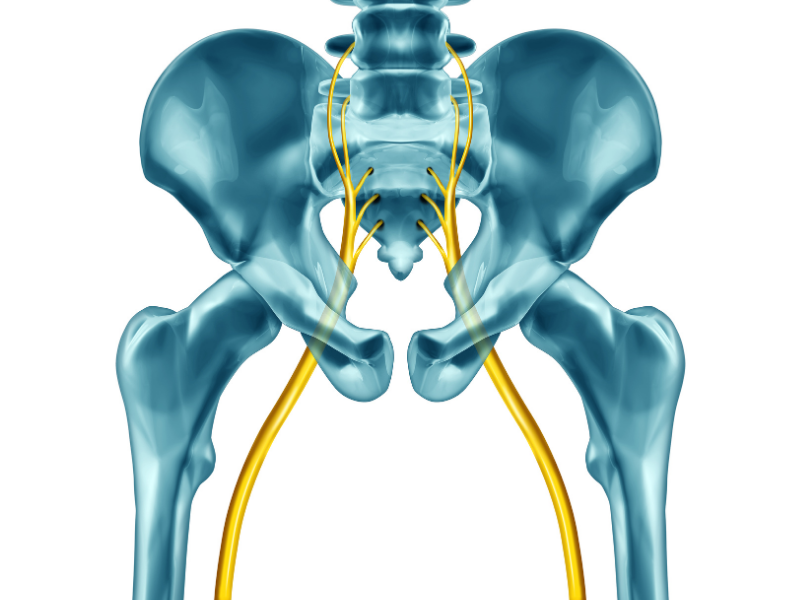
The piriformis is a small but important muscle deep in the buttocks. It runs from the sacrum, the triangular bone at the base of the spine, to the top of the thigh bone.
Its main jobs are:
- rotating the hip outward
- helping stabilise the pelvis during walking and movement
The sciatic nerve, the largest nerve in the body, normally passes underneath this muscle. In a small proportion of people, it runs through part of the muscle instead. Because of this close relationship, irritation or spasm of the piriformis can potentially irritate the sciatic nerve and produce pain that travels into the leg.
Where the Idea Came From
The idea that the piriformis muscle might irritate the sciatic nerve is not new. In 1928, orthopaedic surgeon Yeoman described cases of sciatica that appeared to originate outside the spine. Later, in 1947 and 1952, Robinson described a group of symptoms linked to irritation of the piriformis muscle and introduced the term “piriformis syndrome.”
Since then, the diagnosis has appeared frequently in sports medicine and physiotherapy. However, it remains controversial. There is no definitive diagnostic test, and imaging rarely confirms the condition. Because of this, some clinicians believe piriformis syndrome is overdiagnosed, with many cases of buttock and leg pain actually originating from the lower spine.
This is why careful history taking and a proper physical examination still matter.
What Can Cause Piriformis-Related Pain?
Pain in this region can develop for several reasons.
Common contributors include:
- Repetitive loading from activities such as running or cycling
- Long periods of sitting
- Weakness or imbalance in the gluteal muscles
- A fall or direct blow to the buttocks
- Poor movement patterns around the hip and pelvis
- Irritation of a lumbar nerve root, often from a disc problem
That final point is important. A lumbar disc problem can produce symptoms that are almost identical to those of piriformis pain.
Why Diagnosis Can Be Difficult
There is no single test that confirms the diagnosis of piriformis syndrome.
Instead, clinicians rely on:
- a detailed history
- examination of hip and spinal movement
- testing nerve irritation
- palpation of the deep gluteal muscles
- Tests such as the FAIR test (flexion, adduction, internal rotation of the hip) may reproduce symptoms, but they are not definitive.
In practice, the goal is often to rule out more serious or more common causes of sciatica first, particularly lumbar disc irritation.
Typical Symptoms
People often describe:
- deep aching pain in the buttocks
- pain that may travel down the back of the leg
- symptoms aggravated by prolonged sitting
- tenderness deep in the buttocks
- discomfort when crossing one leg over the other
These symptoms overlap with several other conditions, which is why a proper examination is important.
Treatment
Most cases improve with conservative care.
Management usually focuses on reducing irritation around the nerve and restoring normal hip function.
This may include:
- mobility work for the hip and pelvis
- strengthening the gluteal muscles
- gradual return to exercise
- improving sitting posture and movement habits
- manual treatment from an osteopath or physiotherapist
- heat or ice, depending on symptom response
- Some clinicians also use nerve gliding exercises to reduce nerve sensitivity.
When to Seek Medical Advice
Persistent symptoms should always be assessed properly.
You should seek medical advice if you develop:
- increasing leg weakness
- numbness spreading down the leg
- severe or worsening pain
changes in bladder or bowel control
These symptoms may indicate a spinal nerve problem rather than irritation of the piriformis muscle.
Final Thoughts
Deep buttock pain can be frustrating, particularly when the diagnosis is unclear.
The label piriformis syndrome is still debated, but irritation of the deep gluteal muscles around the sciatic nerve is a recognised source of symptoms.
The key is careful assessment. When the true driver of the pain is identified, treatment focusing on movement, strength, and load management usually leads to good recovery.
Sources
Hopayian K, Song F, Riera R, Sambandan S. The clinical features of piriformis syndrome. European Spine Journal. 2010.
Boyajian-O’Neill LA et al. Diagnosis and management of piriformis syndrome. Journal of the American Osteopathic Association. 2008.