Movement and exercise play an important role in recovery from sciatica. Although symptoms can be painful, a gradual return to activity often supports recovery.
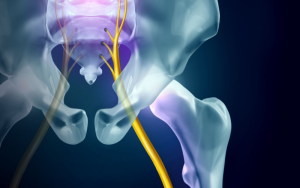
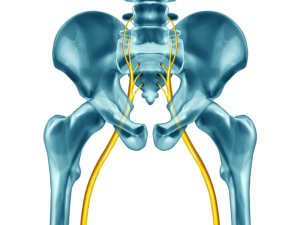
If you would like to understand more about what causes sciatica and why symptoms travel down the leg, you may find it helpful to read
Recovery expectations
Most people recover without surgery.
Studies suggest that around 80–90 % of people improve with conservative care, often within several weeks to a few months.
Exercise in recovery
- Rehabilitation programmes often include a combination of exercises aimed at restoring movement and strength.
Mobility exercises
- Gentle movements are used to restore normal spinal movement.
Strengthening exercises
- Often focusing on the gluteal and hip muscles.
Stretching
- Commonly directed at the hamstrings and buttocks.
- Exercises are usually introduced gradually to avoid aggravating symptoms.
Pacing activity
- A little-and-often approach is usually more helpful than doing too much in one session.
- Gradual progression allows irritated nerves to settle.
When to seek urgent help
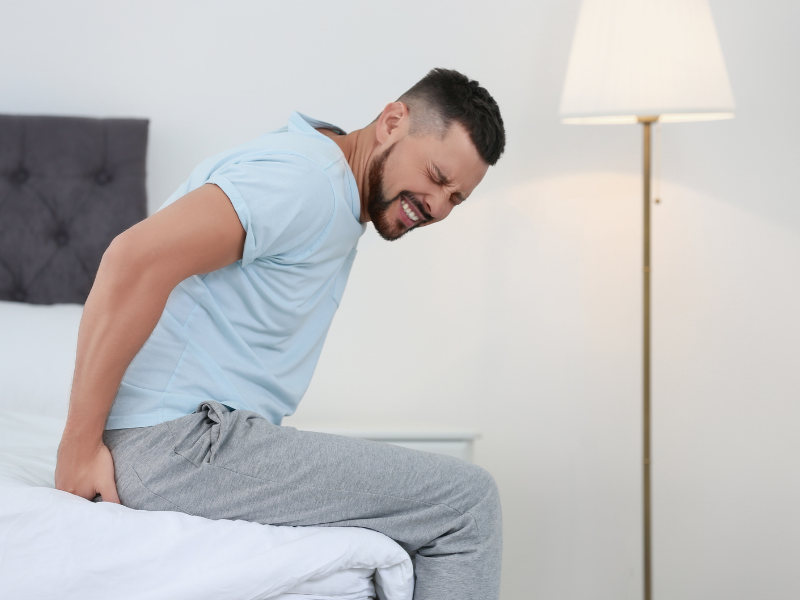
Sciatica itself is not usually a medical emergency. However urgent medical assessment is needed if someone develops:
- loss of bowel or bladder control
- numbness around the saddle area
- progressive leg weakness
These symptoms may indicate Cauda Equina Syndrome, a rare but serious condition that requires urgent medical assessment.
Related articles
Information about osteopathic assessment and treatment can be found in: Can Osteopathy Help Sciatica?
Please note
This information is intended as general guidance and should not replace medical advice, diagnosis, or treatment provided in person by an appropriately trained healthcare professional